HEALTHCARE IN THE SHADOWS
How one of the most vulnerable communities is left unprotected and unheard, but seen everywhere throughout the U.S. — especially in Texas.
By Hannah Holder
During a historical era of presidential and congressional conflict, specific topics are at the forefront of campaigns, as well as voter and citizen concerns: healthcare and immigration.
With hardly any bipartisanship between leaders and common ground between neighbors on these topics, the future of healthcare and immigration policies is left unknown. However, that doesn’t stop our southern-border neighbors from walking hundreds to thousands of miles in hopes for their future.
The U.S. saw its biggest rise in Hispanic immigration in the late 90’s and early 2000’s, with about 48% of immigrants coming to the U.S. being of Hispanic descent, according to the Pew Research Center. Today, that rate has rapidly declined to about 31%. One county in particular, in Texas, continues to have one of the top five largest immigration populations: Harris County, Texas.
Texas is predicted to have Hispanic people become the largest population group in 2022. The Texas Tribune reported the state gained almost nine Hispanic residents for every additional white resident in 2018. American Immigration Council said one in six Texas residents is an immigrant, with about 51% of those immigrants coming from Mexico.
Though Texas is becoming a minority-majority state with a rapid increase in the Hispanic population, 62.4% of Hispanic people are living without health insurance. The Kaiser Family Foundation found altogether, Texas has the largest uninsured nonelderly rate across the nation.
The uninsured rate is potentially a huge factor as to why the Hispanic population takes the lead in COVID-19 cases, with Hispanic populations having almost 37% of confirmed cases and roughly 46% of COVID fatalities in Texas. The pandemic hitting in the early months of 2020 has affected the nation collectively, but left a significant impact specifically on Hispanic populations – both in the U.S. and Texas alike.
With disparities in the healthcare system particularly affecting Hispanic populations, including the undocumented, the pandemic has left these communities even more vulnerable. The American College of Physicians reported an overwhelming amount of evidence suggests those without health insurance die sooner than those with health coverage – highlighting one of the many healthcare disparities in the U.S. disproportionally affecting both Hispanic immigrant communities and lower socioeconomic status communities.
The following stories highlight the life of an undocumented, uninsured, mostly-Spanish speaking, lower socioeconomic status woman struggling to access quality healthcare in the U.S. A Mexico doctor testifies to those health disparities as she witnessed them firsthand when practicing medicine in the U.S.
Caught in Intersectionality
Migrating from Guanajuato, Mexico, Mimi traveled from Southern California to Central Texas where she’s been living for almost 30 years. Coming from a big, lower income family, she came to the U.S. in her early 20’s knowing she wanted to provide a better life for her own future family than what she had growing up. A wife of over 25 years, a mother of five children and once a nurse in Mexico, she now struggles to access, much less be heard and understood by the healthcare system as an undocumented immigrant in the U.S.
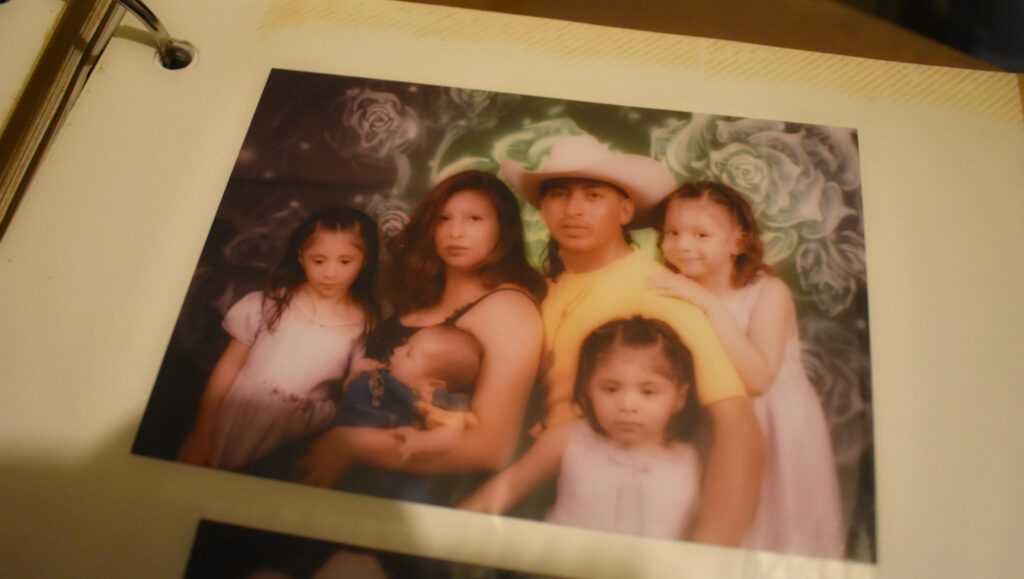
Mimi and her family from their early 2000’s photo shoot at a local mall in Central Texas. Mimi’s eldest daughter said very few pictures remain after their house fire in 2007. Photo courtesy of Hannah Holder
Mimi found herself part of the statistic of 38% of Hispanic/Latinx people living uninsured in the U.S., and 62% of Hispanic/Latinx people living uninsured in Texas. Not only is she affected by the uninsured disparity within the U.S. healthcare system, but by the bias and language barrier that comes with being a mostly Spanish-speaking, lower socioeconomic, undocumented immigrant as well.
Mimi’s identity will remain anonymous for security reasons regarding her undocumented status. Her eldest child and daughter, Lupita, paraphrases her Spanish-speaking mother’s experiences when receiving healthcare. Lupita, 24, will also remain anonymous to protect her mother’s undocumented status.
Seeking healthcare services is once in a blue moon for Mimi and her family. It’s not waiting for the appointment that’s the issue, it’s waiting to save up the money for it. It takes months in advance to save up for a healthcare appointment because Mimi knows with being uninsured, she’ll have to pay a lot more up-front.
When Mimi does go to the doctor’s office, Lupita says her mom feels like she’s “pushed to the side” after informing front desk personnel she does not have a health insurance provider. Lupita has witnessed these experiences first-hand whenever she is able to make the hour drive from Austin to her hometown to attend her mother’s doctors appointments.
They don’t want to work with me,” Mimi began.
She sees it as if they don’t want to work with her due to the healthcare facility not being able to receive money from health insurance companies with her being uninsured. Mimi feels this way because after notifying front desk personnel she is uninsured, they typically will either reschedule her to come in at a different date or refer her to a different clinic, even after months or weeks of waiting for that initial appointment. This is now routine for Mimi.
Another issue for Mimi when seeking healthcare services is the language barrier. One of the first things she does before scheduling a doctor’s appointment is checking to see if anyone at the healthcare facility is able to speak Spanish. About 30% of Texans speak Spanish, but still there’s no one to help translate in healthcare facilities most of the time, and if there is, they don’t want to help.
“I feel better when I know someone understands me fully in Spanish and actually cares to help,” Mimi said.
Having to leave the doctor’s office a few times with the frustration of not being understood, or cared to be heard due to the language barrier, is an experience Mimi is all too familiar with. From being rushed out the door, to quickly being prescribed medication that does not necessarily help her, she’s lost trust in seeing most healthcare professionals. Considering she’s already limited due to being uninsured and skeptical of where she can go due to her undocumented status, this causes her more frustration.
It’s hard for her to get her point across on what the issue is she’s going for, and it’s hard for her to understand the doctors sometimes and what they are trying to tell her to help herself,” Lupita explains.
Mimi is able to speak and understand English to an extent, but not enough to fully be able to communicate and understand her doctor, ultimately upsetting her by not being able to receive the help and care she needs.
With socialized medicine being much more accessible and affordable in Mexico than the U.S., it’s no surprise Americans cross the southern-border to seek medications. Being the only one left undocumented in her family, Mimi is at too much of a risk to ever visit her homeland — that’s why she relies on her documented family members down the road from her to refill her medications whenever they visit Mexico.
From vitamins to antidepressants, Mimi buys her medications in bulk whenever her family is able to make the trip to Mexico once or twice a year. Mimi says, “It’s more affordable that way.”
As for herself, Mimi hasn’t seen Mexico in almost 30 years.
Mimi is living undocumented on an expired VISA, but has been in the process of trying to attain citizenship over the past 10 years. Mimi wants to work in education once attaining legal status. As for now, she stays at home and babysits her extended family’s children.
Witnessing Disparities
Inspired by her dad practicing medicine in Texas, Dr. Stephanie Perez knew at a young age she was destined to be in the medical field. As the oldest of two siblings, she knew she needed to attend a more affordable medical school so her parents could afford to pay for her siblings’ schooling, too. Born and raised outside of Houston, Texas, she moved to Mexico by herself in 2012 to study medicine at Universidad Popular Autonoma del Estado de Puebla. Eight years later, she said studying in Mexico was the best decision she’s made after working firsthand with the U.S. healthcare system.
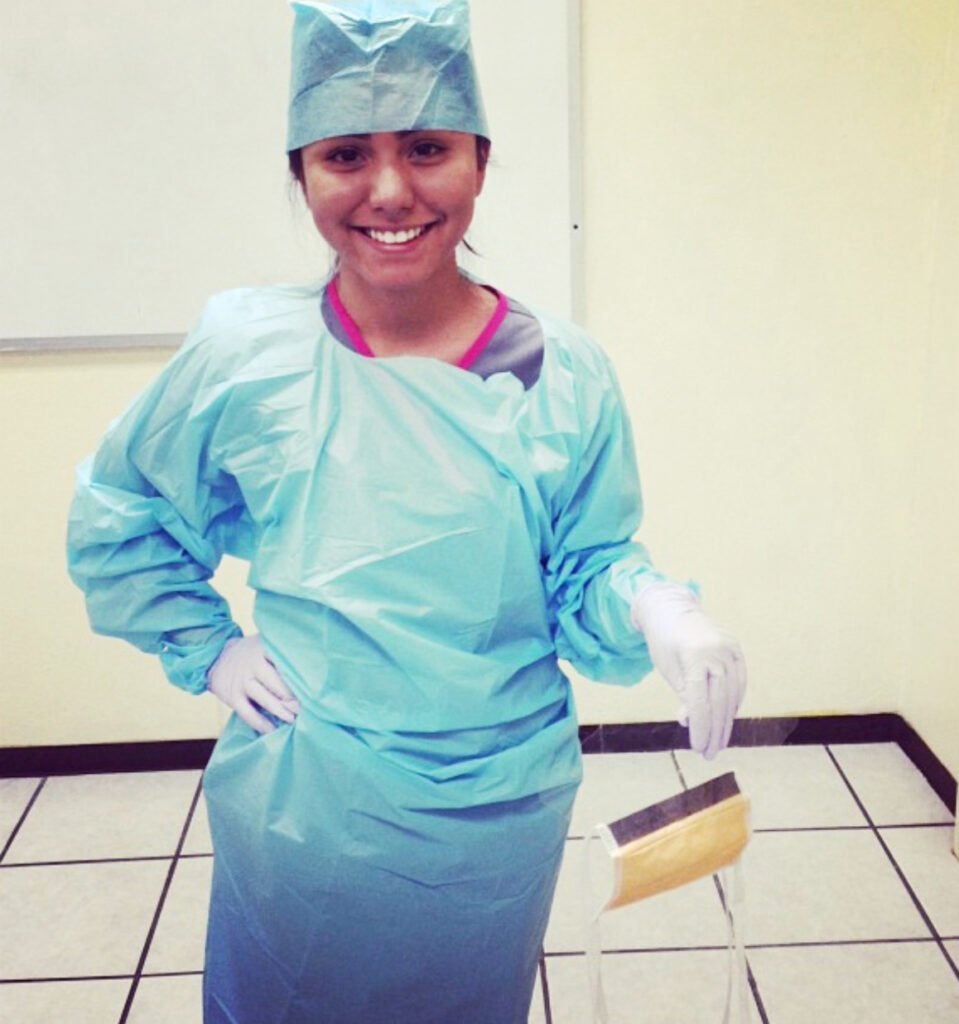
Perez prepping to enter the lab at her university. Photo courtesy of Dr. Stephanie Perez
Quite opposite of Mimi’s decision to come to the U.S., Dr. Stephanie Perez left Texas to pursue medicine in Mexico, and has no intentions on coming back to the states anytime soon after witnessing the differences between healthcare systems and how it affects patients.
She initially planned to come back to the U.S., but after her internship experience studying a rotation of medical services in the Houston area for a year in 2016, she promised herself she would commit to working in Mexico where she felt like only real change could be made possible. She recollected many instances of patients coming into a family clinic worried how they could afford healthcare services if they were going to lose their insurance, referring to ObamaCare, due to then-President Donald Trump coming into office promising to repeal the Affordable Care Act.
So, in the best country in the world, parents were willing to ignore a doctor’s order for them to go to the emergency room for their child because they weren’t sure if they could afford it?” Perez questioned.
A young boy with “an obviously broken arm” came into the clinic, but his parents feared the high bill that would come from taking the child to the ER.
Perez continues, “What a sudden culture shock.”
Little did she know, years later when visiting family in Texas, she too would be stressing about affording an ER visit.
Hysterically crying, Perez drove over 500 miles back to Mexico on what she thought was a broken foot to avoid paying a large medical bill in the U.S. She knew going to the emergency room uninsured would put her in unnecessary debt, a foreign problem compared to the universal healthcare system in Mexico.
I’m not going to go to the hospital and spend $2,000 on an X-ray I can read. I can go to Mexico and go to a lab and say, ‘I need this, this and this.’ They’ll do the X-ray and read it. Why would I spend that much money?” Perez explained.

The “unethical” high costs for healthcare services in the U.S. is one reason why Perez continues to pursue medicine in Mexico. She reflects back on her internship in Houston when she saw patients who could not afford their HIV medications.
Prices of medications have only been going up over the years to the point your health can literally bankrupt you,” Perez expressed.
A patient at a Houston medicaid clinic questioned which medication should they be more worried about getting first because they could not afford both high blood pressure and diabetes medications. Perez couldn’t help to reveal a shocked look on her face, and the patient proceeded to ask if taking one medication every other day was an option instead.

Perez said she has applied to work emergency room medicine in Mexico to “truly serve people,” crediting the country’s affordable, socialized medicine.
“Imperfect [the healthcare system], but at least I can sleep at night knowing I didn’t ruin someone’s life and force them into a debt they were never prepared to take on,” Perez said.
Perez is currently working at a public hospital in Mexico doing emergency room medicine. In the coming years she plans to work for Doctors Without Borders, an international humanitarian medical organization known for its aid during disasters and epidemics.
Status of Vulnerability
The U.S. has policies at the federal, state and local level to deny undocumented people healthcare services. In the 1980’s they didn’t have these policies. It wasn’t until the 1990’s, when the rise in immigration began, policies were implemented to deny services to immigrants, such as healthcare.
Professor of Sociology, with specializations in Latina/o and Medical Sociology at Texas State University, Dr. Gloria Martinez-Ramos said everyone should have access to healthcare — it’s a human right.
Many of those who are undocumented take the risk because they have no choice. They’re seeking a better life even though they will not be treated equally, putting them at risk to be exploited in American society,” Martinez explained.
The U.S. has always had a high demand to recruit, hire and work undocumented people for cheap labor. From tiring shifts on a farm, to construction like Mimi’s husband does full-time, to dangerous factory jobs. Yet this same community is the one of the largest groups to be left unprotected when it comes to full rights of healthcare and pay — even now during a pandemic when they are being hit the hardest.
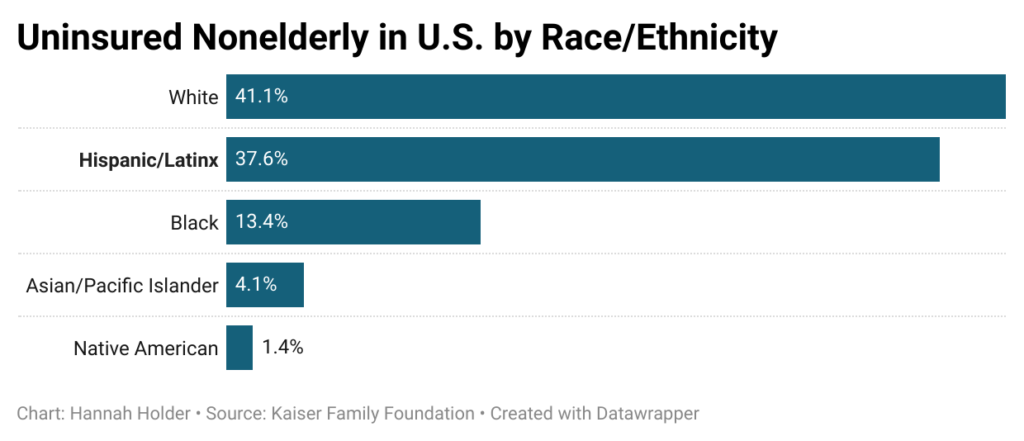
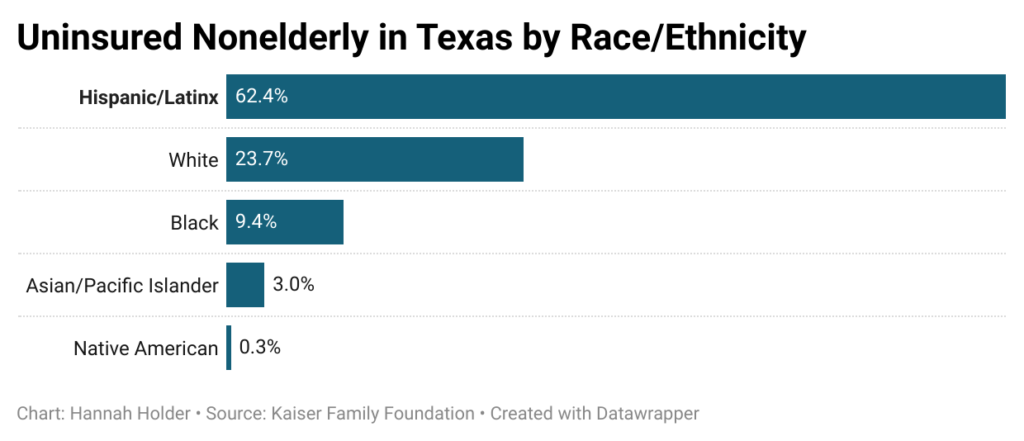
Undocumented people are at a high risk, if not the highest, to be living in the U.S. uninsured. Because the undocumented community works in the most difficult, exploited job fields, they do not get the opportunity for health insurance due to these types of jobs not providing healthcare coverage for their workers.
The undocumented community also faces ineligibility when it comes to federal funded programs like Medicaid, Medicare and the Affordable Care Act. Only six states and Washington D.C. provide funding for healthcare to children regardless of immigration status. Texas is not one of those states.
The health disparities of not only being uninsured, but of lower socioeconomic status, and the language barrier as well as the bias plays a role in why the undocumented community may not feel safe seeking healthcare services in the U.S.
Research shows former President Trump’s harsh immigration policies are a factor when it comes to undocumented immigrants not feeling safe seeking healthcare services. Specifically, from the fear of their chances to citizenship being denied or worse case scenario, deportation — Mimi included.
Mimi said she’s never felt more scared living in the U.S. than she did when President Trump was in office. For four years Mimi lived in fear of being pulled over by a police officer with the possible chance of it leading to being detained or deportation. She said she mostly feared “being treated badly” in public because of what she’s seen on the news and social media. Those fears remain.
Mimi’s experiences help confirm Martinez’s statement of the status of being undocumented as “one of the most vulnerable statuses to exist in American society.”